


Ichthyosaur Fossils: Prehistoric Sea Reptiles of the UK Coast
With streamlined bodies, powerful tails and enormous eyes, ichthyosaurs were remarkable marine reptiles that swam through prehistoric oceans millions of years before whales and dolphins evolved. Often compared to modern dolphins, these fascinating animals are among the most recognisable fossils found along the UK coastline.
From Lyme Regis in Dorset to Whitby in Yorkshire, Britain has produced some incredible ichthyosaur discoveries, helping scientists understand the creatures that once inhabited our ancient seas.

What were ichthyosaurs?
The name ichthyosaur means “fish lizard”, from the Greek words ichthys (fish) and sauros (lizard). Despite their fish-like appearance, ichthyosaurs were reptiles, not fish or dinosaurs.
They first appeared around 250 million years ago and became highly adapted to life in the sea. Many had streamlined bodies, paddle-like limbs and powerful tails that helped them swim efficiently, resembling modern day dolphins.
Different species and sizes
Ichthyosaurs came in a remarkable variety of shapes and sizes. Many familiar species measured around two to four metres long, while others were considerably smaller. At the other extreme, some of the largest known ichthyosaurs may have reached around 20 metres or more, although estimates for these giants are based on incomplete fossil remains.
Their features also varied. Some species had long, narrow snouts lined with sharp teeth for catching fish and squid-like animals, while others had broader teeth suited to crushing harder prey. Their skulls, eyes and body proportions provide clues about how different species lived and hunted.
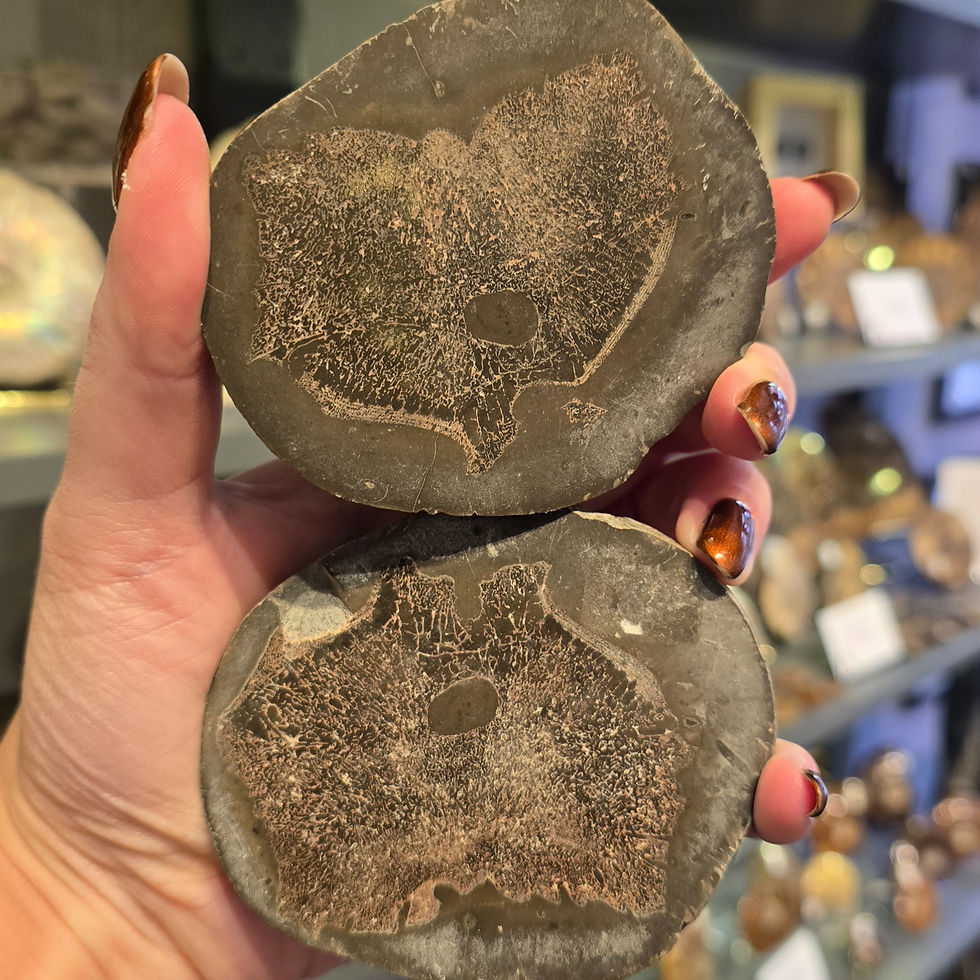
This diversity means that ichthyosaur fossils can look very different from one another, from individual teeth and vertebrae to impressive, near-complete skeletons.

What did ichthyosaurs eat, and what hunted them?
Ichthyosaurs were carnivores. Depending on the species, their diet included fish, squid-like cephalopods and other marine animals. Some fossils even preserve the remains of an animal’s last meal, giving scientists direct evidence of its diet.
Although many ichthyosaurs were formidable hunters, they were not necessarily safe from other predators. Larger ichthyosaurs and other large marine reptiles like Pliosaurus may have threatened smaller individuals, while some species could have hunted other marine reptiles themselves. However, the predators varied depending on the period and location, so not every marine reptile lived alongside every ichthyosaur.
Ichthyosaurs eventually became extinct around 90 million years ago, during the Cretaceous Period.
The strange fossilised eyes of ichthyosaurs
One of the most fascinating features of ichthyosaur fossils is their enormous eyes. Some species had eyes among the largest known relative to body size in the animal kingdom, with the largest examples measuring around 25 centimetres across.
In certain fossils, the eye area preserves a circular arrangement of small, overlapping bones called a sclerotic ring. This structure supported the eyeball and helped maintain its shape. When fossilised, it can look like a strange stone ring within the skull.
These large eyes may have helped some ichthyosaurs see in dimly lit waters, potentially giving them an advantage when hunting at depth. Their unusual eyes offer a glimpse into how these reptiles adapted to life in the ocean.
Where are ichthyosaur fossils found in the UK?
Two particularly famous locations for ichthyosaur fossils are the Jurassic Coast in Dorset and the Yorkshire coast around Whitby.
Lyme Regis, Dorset
The Jurassic Coast is closely associated with Mary Anning and her discoveries. Its cliffs expose rocks formed in ancient marine environments, preserving ichthyosaur bones, vertebrae and other prehistoric remains. Coastal erosion can expose new fossils, making the area an important location for palaeontology.
Whitby, Yorkshire
Whitby is another significant source of ichthyosaur fossils. During the Jurassic Period, much of the region was beneath the sea, where marine animals lived and their remains became buried in sediment.
These discoveries reveal how different Britain once looked, when the land we live on today was part of a very different prehistoric world.


Comments