


Fossils That Sound Like Dinosaurs… But Aren’t
One of the most common things we hear in the shop is someone pointing at a fossil & saying, “That’s a dinosaur, right?” And it’s easy to see why. Many prehistoric creatures have names ending in “-saurus,” which literally means “lizard.” But despite the name, not every saurus was actually a dinosaur.
In fact, some of the fossils people most often assume are dinosaurs actually belonged to marine reptiles or ancient crocodiles that lived alongside dinosaurs but were part of completely different branches of the reptile family tree.
Here are a few fossils we often see mistaken for dinosaurs.
Mosasaurus Tooth
One of the most popular fossils we carry is a Mosasaurus tooth, and it’s very often called a “dinosaur tooth.”

But Mosasaurus wasn’t a dinosaur at all. It was a giant marine reptile that lived in the oceans during the Late Cretaceous Period, around 70–66 million years ago.
Mosasaurus looked a bit like a cross between a crocodile, a monitor lizard & a shark. It had a long, streamlined body, powerful tail for swimming & a mouth full of sharp teeth designed for catching fish, ammonites and even other marine reptiles.
While dinosaurs ruled the land at the time, mosasaurs ruled the seas. They were actually more closely related to modern monitor lizards & snakes than to dinosaurs.
Keichousaurus Fossil
Another fossil that often gets mistaken for a dinosaur is the delicate little skeleton of Keichousaurus.

These fossils are famous for their beautifully preserved full skeletons, usually found in limestone from China and dating back around 220 million years to the Triassic Period.
Despite the dinosaur-sounding name, Keichousaurus was actually a small marine reptile that lived in shallow lagoons & coastal waters. It had a long neck, paddle-like limbs and a slender body adapted for swimming.
Think of it more like a distant cousin of other early marine reptiles rather than a dinosaur. Dinosaurs lived mostly on land, while Keichousaurus spent its life in the water.
Elosuchus Tooth
Sometimes the confusion comes from fossils that really do resemble dinosaur teeth, like the tooth of Elosuchus.

Elosuchus was an ancient crocodile relative that lived during the Cretaceous Period, around 100 million years ago. Its teeth can look very similar to certain dinosaur teeth at first glance, which is why they’re often mistaken for them.
However, Elosuchus belonged to the crocodilian lineage, meaning it’s more closely related to modern crocodiles & alligators than to dinosaurs.
It likely lived in rivers and coastal environments, hunting fish and small animals in much the same way crocodiles do today.
Ichthyosaur Vertebrae
The name Ichthyosaurus literally means “fish lizard,” which already hints that this animal was something quite different.
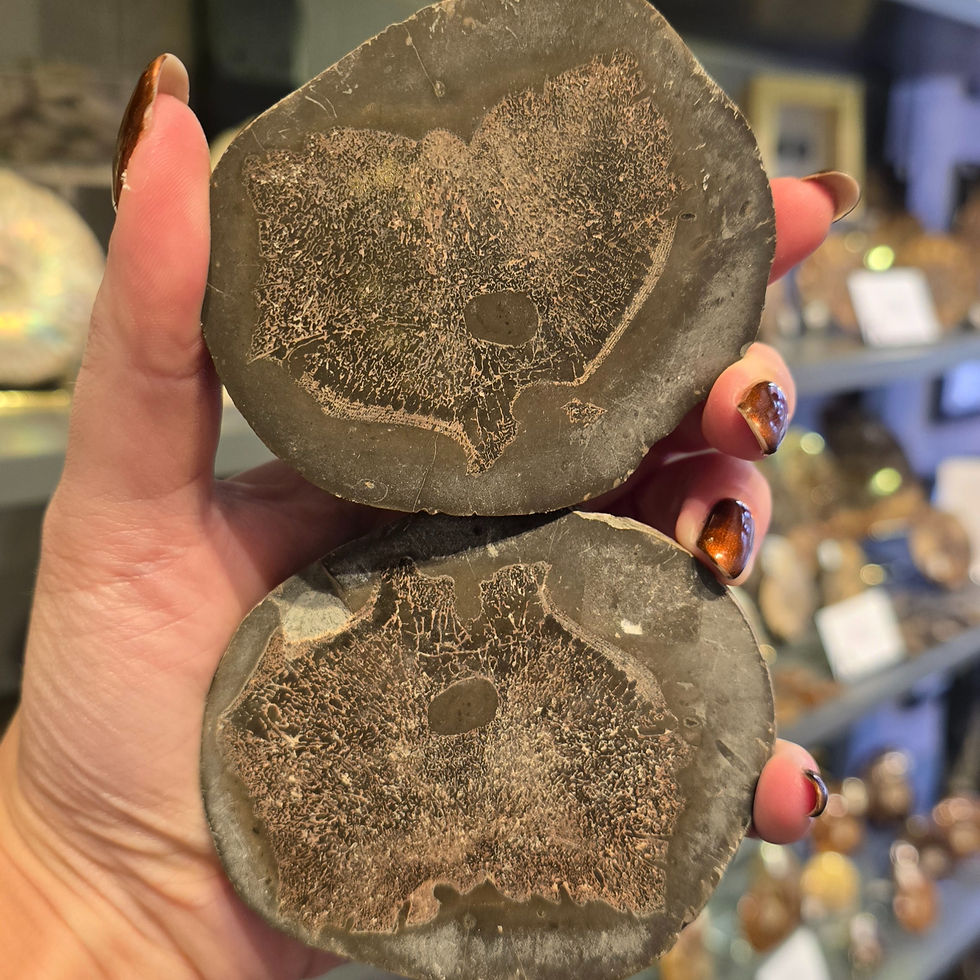
Ichthyosaurs were fully marine reptiles that evolved bodies very similar to modern dolphins, with streamlined shapes, large eyes & powerful tails built for speed in the water.
A fossil Ichthyosaur vertebra often surprises people because it doesn’t look very dramatic on its own, but it belonged to an animal that could grow several metres long and was one of the top predators of the ancient seas.
They lived during the Jurassic Period, roughly 200–180 million years ago, swimming in oceans while dinosaurs walked the land above them.
Why They Get Mistaken for Dinosaurs
There are a few simple reasons these fossils get confused with dinosaurs:
1. The name “-saurus.” The word comes from Greek and simply means “lizard.” Scientists used it for many prehistoric reptiles, not just dinosaurs.
2. They lived at the same time. Many marine reptiles and ancient crocodiles lived during the Triassic, Jurassic and Cretaceous periods, the same eras when dinosaurs dominated the land.
3. They’re reptiles. To the untrained eye, prehistoric reptiles can look very similar, especially when only a tooth or bone is preserved.
Even though these fossils aren’t technically dinosaurs, they’re still incredible pieces of prehistoric life. They come from the same time periods and ecosystems, giving us a bigger picture of what the world looked like millions of years ago.
From the oceans ruled by Mosasaurus, to the lagoons where Keichousaurus swam, to ancient rivers where Elosuchus hunted, these fossils remind us that the prehistoric world was far more diverse than just dinosaurs.
And sometimes, the fossils that aren’t dinosaurs are just as fascinating.


Comments